
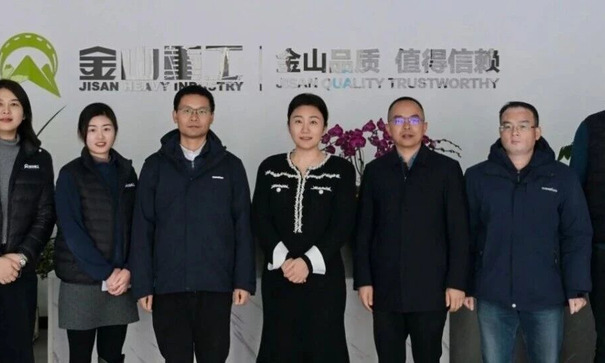
On 21 January 2026 a delegation from Sunward Equipment spent a full day at the JISAN plant in Yantai. This was not a sales visit. It was a supplier audit of the kind that comes before an OEM attachment programme: the customer‘s team walks the line, opens the drawings, pulls product at random and decides whether the factory can hold a specification across a production run, not just for the sample it sends.
JISAN chairman Yang Shaojing met the delegation with the engineering, quality and supply-chain staff who would actually carry the programme. Four subjects were on the table: attachment matching for Sunward‘s excavator range, joint technical development, quality-system upgrading and supply-chain planning.
What an audit actually looks at
• Patents in application, not on a wall. The visitors asked to see where JISAN‘s 45 patented technologies appear in the product — pivot geometry, jaw structures, hydraulic layout — rather than how many certificates the company holds.
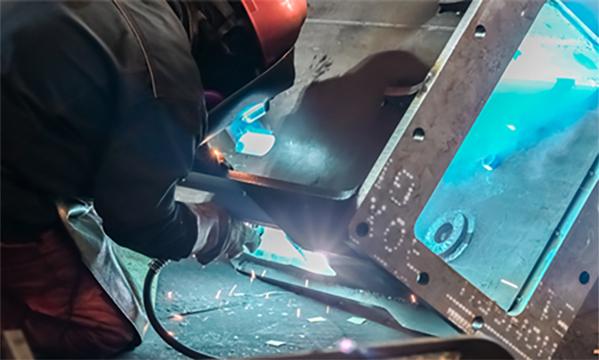
• Plate and process. Imported Hardox wear plate, the cutting and welding sequence, and the machining of pivot bores after welding. Bores cut before the weld cools distort as the seam contracts; that misalignment is the root cause of most pin and bushing failures in the field. Every visitor who has run attachments for twenty years knows this, which is why they ask.
• Systems against records. ISO 9001 quality and ISO 14001 environmental documentation, checked against traceability records — plate certificate to serial number — rather than against a policy binder.
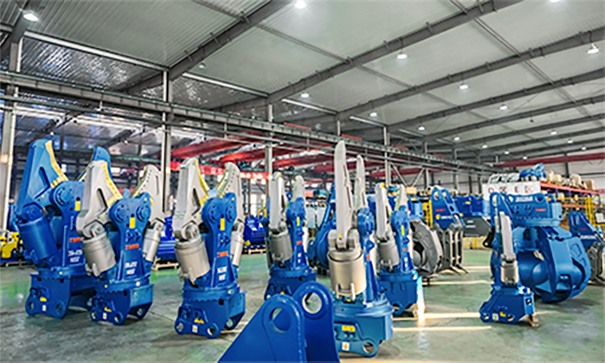
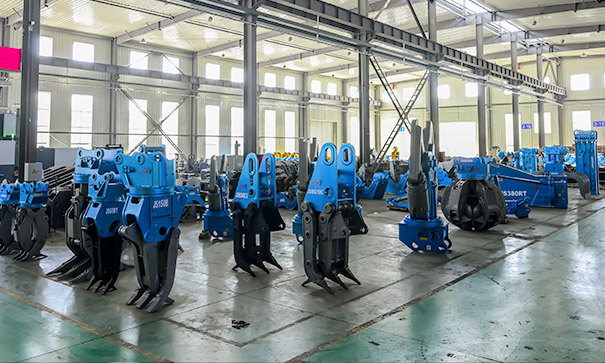
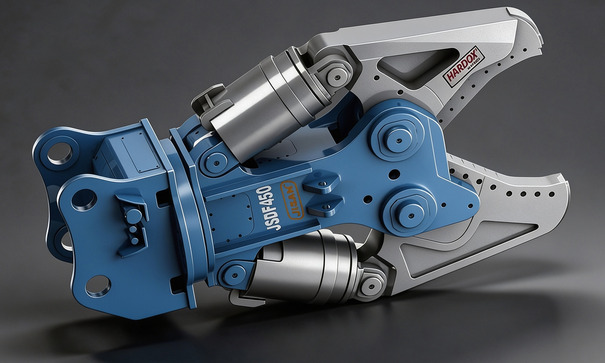
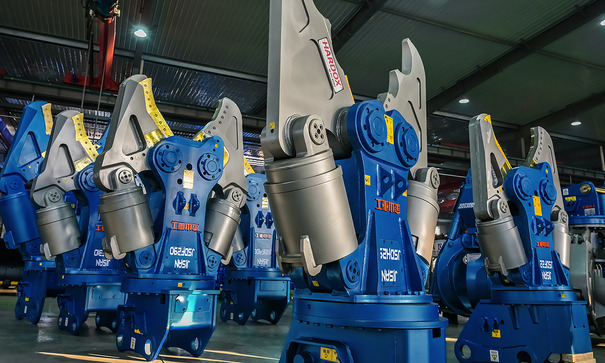
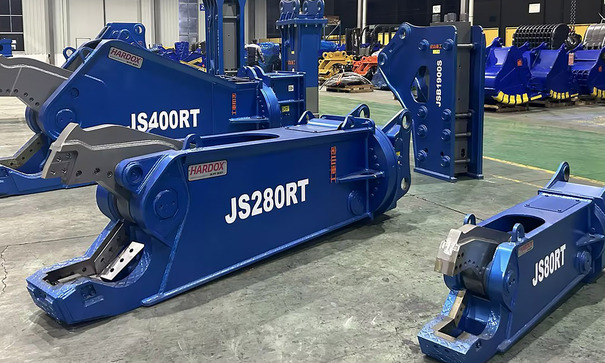
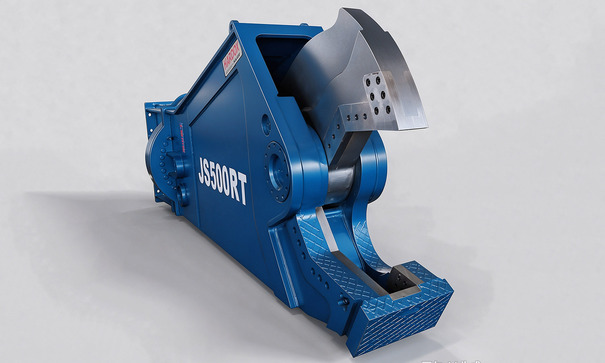
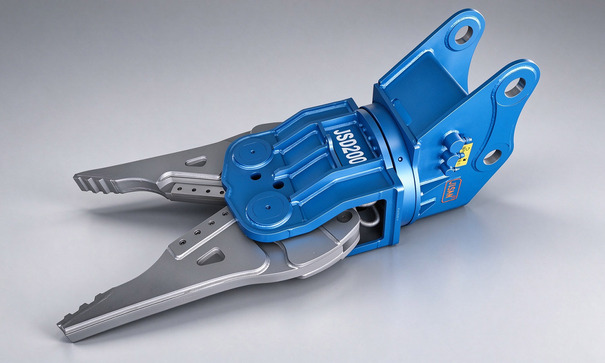
• Sampled product. Dual-cylinder shears, hydraulic grapples and eagle shears were pulled at random and checked for durability, dimensional accuracy and safety features.
The numbers behind the visit
JISAN runs a workforce of 200 to 299 at the Yantai site, with material traceability from the steel certificate to the finished serial number, inventory managed dynamically rather than by batch, and a stated capability to respond to volume orders without re-scheduling the line. For an OEM, those are the three answers that matter: can you trace the steel, can you hold stock, and can you add a shift‘s worth of orders without breaking a delivery date.
Export machines are the difficult part
Sunward‘s team raised the point that matters most to buyers outside China: attachments for excavators exported to markets where the dealer network is thin and a service visit is measured in weeks. The two sides agreed to joint development on that basis, and to building a service model that covers the attachment over its whole life rather than up to the warranty boundary.
The follow-up is concrete: a joint technical group, a first batch of attachments built to Sunward carrier specifications and tested before volume production, and a quarterly review where demand and technical changes are exchanged. JISAN is to submit the proposal covering specification, price and lead time for that first batch.
Why it matters if you run a mixed fleet
The attachment interface is the same problem whether the carrier is a Sunward, a SANY, a Komatsu or a Hitachi: pin dimensions, hydraulic flow and pressure, and the question of who is responsible when a bracket cracks. An attachment maker that has been through an OEM audit has already answered those questions in writing, with drawings and with a warranty split that both sides signed.
That is the practical value of a day like this one. Not a photograph of two management teams, but a set of documents that says what the bracket will be machined to, what pressure the shear will be set at, and which party answers the phone in year two.
Buying attachments for a mixed fleet? Send us the carrier models, the pin diameters and the flow and pressure from the machine‘s hydraulic test report. We will confirm the bracket drawing before the order, not after the first crack.