• Home

  • Attachments

  • Technology

  • Manufacturing

  • News & Media

  • About Us

  • Contact Us

Home > News & Media > Company News
A CAT 313, a Three-Day Window and a Full Dismantling Package

A new carrier, a three-day window, and one order

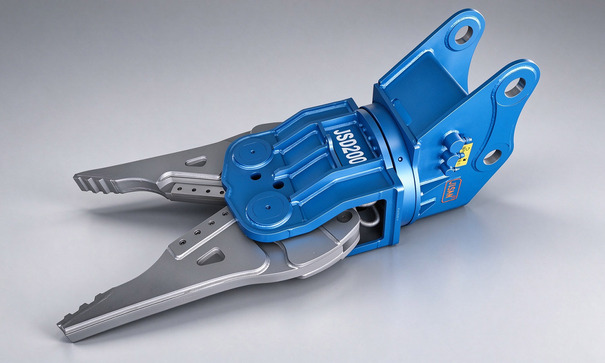
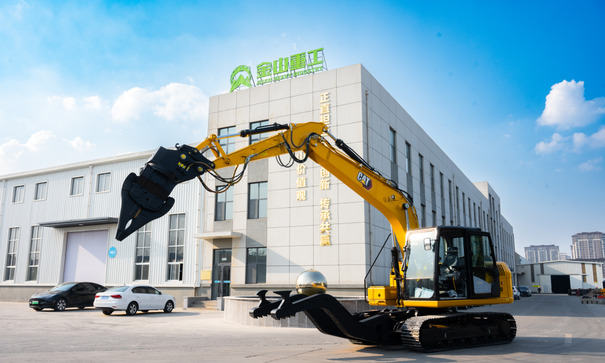
In spring 2025 a customer brought a newly purchased Caterpillar 313 to the JISAN test yard in Yantai. He had ordered a complete dismantling package — the car dismantling tool, the car press frame and a quick coupler — and wanted it installed, commissioned and shipped inside three days, because the yard it was going to was already taking vehicles.

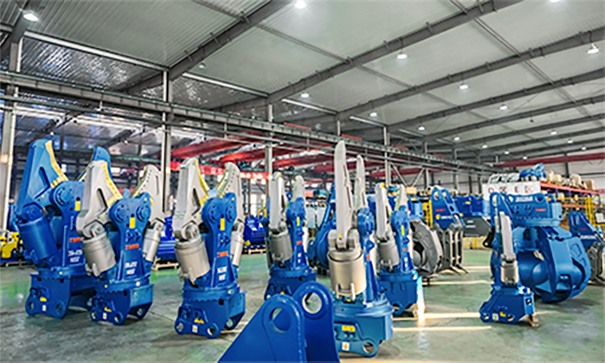
The package was the 200 compact dismantling tool with a 15S single-acting press frame and a JISAN 06 quick coupler. The 200 is specified for 12 to 25 tonne carriers, weighs 940 kg and opens to 750 mm, which covers passenger cars, vans, light trucks, cabs and body shells — the material that makes up most of what a depolluted vehicle becomes.

Why the install happens at the factory

Fitting a dismantling tool is welding, plumbing and alignment, and none of it is easier in a customer‘s yard. Doing it at JISAN before shipment means:

• The bracket is welded to the coupler on a jig, not to a machine sitting on gravel.

• The hydraulic circuit is plumbed, pressure-set and leak-tested against the carrier‘s actual flow and pressure, measured on the machine rather than taken from a specification sheet.

• The tool is commissioned under load in the test yard, so the first cut happens where a problem can be fixed in an hour instead of a week.

For this order the welding and the pipework were run in parallel rather than in sequence, which is what made three days possible on a machine with limited clearance at the undercarriage and a dozen connections to route.

What is inside the tool

The details that decide whether a dismantling tool survives its first year of vehicle shells:

• Thickened wear plate at the nose. The tip is the first part to touch the body and the first part to wear. JISAN uses an upgraded wear steel, thicker than the standard build, with a toothed profile that bites rather than slides, and a full-wrap toothed plate over the tip — the area that fails first on a cheaper tool.

• One-piece machined connector. The connector is welded and then machined as a single piece on a gantry machining centre. Concentricity is held to 0.01 mm, which is why the load is shared evenly across both sides instead of concentrating at one pin.

• Rotation drive. A BMV-630 motor with a shorter output shaft; at the same oil flow it turns about 30 percent faster than the previous unit. The mounting bolts went from M12 to M16, raising single-bolt shear strength by roughly 35 percent — a small change that stops the motor working loose on a tool that rotates all day.

• The mounting bracket. Triangular bracing with reinforcing ribs on every bracket that leaves the factory, so the tool does not rock on the coupler under a tearing load.

The press frame is half the package

A dismantling tool separates; the press frame holds. JISAN builds two versions:

• Standard. No open-and-close function, lighter, lower oil demand — for yards that work a steady flow of similar vehicles.

• Multi-function. Remote operation from the cab, 360 degree rotation with up and down movement and powered clamping, for yards that see mixed vehicles and need to hold an irregular shape while the tool works on it.

Both use embedded welding and high-strength steel, with a bowl-shaped jaw profile and wear-alloy teeth for tyres, frame rails and the parts that refuse to sit still.

What the customer got

Three days after the carrier arrived, the package left for the customer‘s site: tool, press frame and coupler installed, commissioned and tested together. The alternative — shipping three items separately and assembling them on site — usually costs a week of production, and the first week is when a new dismantling line either finds its rhythm or does not.

Fitting out a carrier for vehicle dismantling? Send the carrier model, the pin diameters and what you process in a normal week. We will confirm the tool size, the press frame version and whether the package should be installed before shipment.

New Excavator Attachments Unveiled, Unlocking New Levels of Operational Efficiency Deeply rooted in the field of excavator front-end demolition and material handling attachments, Jinshan Heavy Industry firmly believes: great products originate from demand, and superior quality is forged through perseverance. From dual-cylinder heavy-duty shears, eagle shears, and scrap car dismantling equipment, to various hydraulic grapples, mechanical claws, clamps, vibrating compactors, hydraulic breakers, quick couplers, and excavator buckets, we continuously iterate and refine our products to address the core pain points of engineering operations. Recently, Jinshan Heavy Industry proudly launches five new star products: the Multi-Lock Coupler, 150-I/400 Clamp, Five-Finger Clamp, 80ACR Dual-Link Log Grapple, and 220CD Dual-Cylinder Scrap Grapple. This quintet of new arrivals brings more precise compatibility, robust quality, and high-efficiency performance to crack operational challenges, helping clients reduce costs and boost efficiency, continuing our legendary legacy in the attachment industry! 01 Driven by Demand, New Products Tackle Operational Pain Points Jinshan understands that in engineering operations, "poor compatibility, low efficiency, and high wear-and-tear" are the core frustrations for our clients: couplers disconnecting unexpectedly, log grapples failing to secure materials, and scrap grapples lacking the power to meet project deadlines... Based on these insights, our new products deliver targeted solutions that perfectly fit real-world applications. Jinshan Multi-Lock Coupler Equipped with multiple locking positions to provide multi-layered safety, effectively preventing accidental disconnections caused by vibration or impact during operation. Features automatic locking without the need for manual safety pin insertion, ensuring secure connections and easy, safe detachment. Compatible with various excavator attachments, it significantly enhances operational safety and stability while reducing downtime. 80ACR Dual-Link Log Grapple Optimized for grabbing scenarios involving wood and other materials. The dual-link structure ensures strong synchronization and flexible operation. With 360° free rotation, it accurately adjusts grabbing angles, making it suitable for narrow spaces. It balances efficiency and convenience, drastically reducing labor costs. 150-I/400 Clamp & Five-Finger Clamp Compatible with excavators of various tonnages. A large opening width combined with strong clamping force ensures a firm, slip-free grip. The Five-Finger Clamp mimics the human palm structure with five claws, offering precise control. It can securely hold large materials while gently grabbing small items to avoid damage. Adaptable to landscaping, building materials, waste recycling, and more, it achieves "one machine, multiple uses," breaking the limitations of single-scenario operations. 220CD Dual-Cylinder Scrap Grapple Specifically designed for heavy materials like scrap steel and iron. Powered by dual cylinders, it delivers strong and even clamping force. The claw head is made of high-hardness alloy steel, offering wear and impact resistance to handle 24/7 high-intensity operations. It significantly improves the efficiency of heavy material grabbing, solving the pain points of insufficient power and easy wear associated with traditional scrap grapples. 02 Safety Upgraded, Building a "Safety Net" for Demolition Operations From classic products to brand-new iterations, we have never stopped upgrading. Building on the original quality DNA, our new products integrate market feedback and technological innovations to achieve comprehensive optimization. Every detail highlights our craftsmanship. Structural Design Optimization The new products feature a modular design compatible with mainstream excavator tonnages on the market. No additional equipment modification is required, making disassembly and assembly convenient and reducing client investment costs. Comprehensive Performance Upgrade The upgraded hydraulic control system ensures smooth, lag-free operation and lower energy consumption. It also enhances equipment flexibility and stability, adapting to complex operating environments. Multi-Scenario Adaptability Covering multiple scenarios such as scrap steel recycling, wood processing, construction, and landscaping, meeting the personalized needs of different clients and truly realizing "one product, multiple scenarios." We always take "customer needs" as the core direction of our iterations, collecting operational feedback from thousands of clients to optimize product structure and improve performance parameters. This ensures that every new product accurately matches operational needs, giving clients peace of mind and high efficiency. 03 Superior Quality, Upholding Craftsmanship to Build Reputation Strict Quality Standards, Full-Process Control from Source to Factory As a professional attachment manufacturer, quality is our foundation. All new products in this launch continue our strict quality standards. From raw material procurement to production and delivery, every step is strictly inspected and tested to eliminate any quality hazards. New products are made of high-strength wear-resistant steel plates and high-toughness alloy steel, forged through special heat treatment to enhance wear resistance, impact resistance, and service life. The hydraulic system uses top-tier international sealing components to eliminate oil leakage risks. Welds undergo non-destructive testing to ensure structural stability. Before leaving the factory, every new machine undergoes rigorous load testing and working condition simulations to ensure stable reliability even in high-intensity operations. Reduce later maintenance costs and truly achieve "one investment, long-term benefits," winning customer trust with superior quality. 04 Seventeen Years of Unchanged Original Intention, Empowering Efficient Engineering Operations From the deep cultivation of classic products to the iterative upgrade of new ones, Jinshan always focuses on "adapting to scenarios, solving pain points, and empowering enterprises" as our core. We manufacture high-quality attachment products that fit customer needs and are committed to providing clients with comprehensive operational solutions. The launch of these five new products is not only a demonstration of Jinshan‘s technical strength but also the fulfillment of our commitment to "empowering customers and creating value together." Whether you are engaged in scrap recycling, municipal construction, port terminals, or wood processing; regardless of your excavator‘s tonnage or specific operational needs, Jinshan can match you with exclusive attachments.

New Product Launch | Driven by Demand, Upgraded for Excellence!

Oct.20.2026

Dear Colleagues, The simple warmth of daily meals brings comfort to every heart. Three meals a day are not only a source of energy, but also the company’s most sincere care for every member of our JISAN family. The company always places employee food safety at the forefront of logistical support. We strictly control ingredient quality and build a high-quality, safe, and transparent supply system, guarding the dietary health of all employees with great care. Food Safety Starts at the Source Food safety is never a small matter, and source control is essential. To fundamentally eliminate food safety risks and ensure the quality and freshness of every meal, the company has moved away from fragmented purchasing and unreliable supply methods. We have carefully selected leading national brands as our core ingredient suppliers and established a standardized, compliant, and traceable supply chain system. This allows us to manage the entire ingredient procurement process in a standardized way and build a strong food safety defense line from the source. High Standards, Strict Requirements, No Compromise on Details In ingredient selection, we uphold high standards and strict requirements, never relaxing our attention to detail. Meat products are sourced from leading brands such as Shuanghui and Chunxue. The meat is fresh, compliant, and fully inspected, with quality proven by both the market and time. We strictly reject inferior, frozen, or expired meat to ensure employees enjoy healthy, high-quality meat products. Staple flour uses Wudeli National Standard Grade-1 premium flour, with fine texture, no unnecessary additives, and a pure taste, ensuring quality from the very foundation of our meals. Vegetables and fruits are supplied through well-known supply chain systems. Only premium Grade-1 produce is selected to ensure health and safety. All items are freshly purchased and delivered daily, with strict screening for appearance and freshness. Rotten, spoiled, or excessively pesticide-contaminated ingredients are strictly prohibited, ensuring every bite remains natural, healthy, and nutritious. Food Safety Is a Shared Responsibility Protecting food safety is not the responsibility of the company alone. It is a shared commitment between the company and all employees. Transparent supervision and continuous improvement are the core principles behind our canteen services. To continuously improve meal quality and refine dining services, the company sincerely invites all employees to participate in canteen food safety supervision. Together, we can build a safe, high-quality, and caring dining environment. Good ingredients are important, but taste and experience must also be tested by everyone. The best judges of our canteen are those who dine here every day. We Sincerely Invite Every Colleague to: Actively supervise – If you notice any issues with ingredient freshness, processing hygiene, or unusual taste, please raise them at any time. Share feedback openly – Whether it is suggestions for dishes, preferences for meal varieties, or ideas for service improvement, your voice is welcome. Protect our canteen together – The canteen is our shared “family kitchen.” Every piece of feedback helps protect everyone’s health. Feedback Channels Monthly “Dietary Committee” face-to-face communication sessions Open surveys Every meal should bring peace of mind. We understand that no matter how many rules we set, nothing matters more than hearing you say, “It tastes good, and I feel reassured.” No matter how strict our standards are, they still need your eyes and voice to help uphold them. From today, let us work together. What enters our mouths carries the quality assurance of trusted brands. What stays in our hearts is the company’s sincere care for everyone. Every piece of feedback will be carefully recorded and followed through with real improvements. Let us strive to make “eating well” a standard we pursue with dedication. We look forward to all employees working hand in hand with the company, offering suggestions, participating in supervision, and jointly protecting a pleasant dining environment. May our canteen become a warm harbor for every JISAN employee, and may the comforting aroma of safe, healthy, and delicious meals accompany us as we move forward and grow together.

A Promise of Food Safety to All JISAN Family Members

Oct.20.2026

A common workplace misconception is treating the completion of a process as the completion of work, and treating the completion of an action as the achievement of a result. Once a plan is sent, a report is submitted, a document is copied, or an application is filed, many people assume the task is finished the moment they click “Send.” Yet countless workplace problems, project delays, and coordination failures stem from this very habit: we complete the action, but we do not take responsibility for the final result. The Biggest Ineffective Effort at Work: Treating Submission as Completion Many people operate with this logic: “I did what was required, submitted it on time, and completed the process. What happens next is someone else’s responsibility, the process’s responsibility, or a matter of timing.” This is typical process-oriented thinking, or form-oriented thinking. You send a coordination email but do not confirm whether the recipient has received it, understood it, or acted on it. You submit a corrective report but do not follow up on implementation, compliance, or closure. You file a work plan but do not track progress, verify results, or resolve bottlenecks. You submit an approval request but do not proactively follow up, provide missing materials, or track the outcome. People replace “I have done it” with “I have done it well,” and use “I have completed the process” to mask the fact that the work has not been delivered. They may appear busy and productive, with every task seemingly submitted. In reality, much of the work remains suspended, without results or value. As management thinking puts it: the most efficient form of useless work is completing a task with no result, quickly and precisely. Processes are only carriers. Submission is only a step. Without real delivery, every action becomes labor. Companies Need Result Orientation, Not Action Orientation Companies do not evaluate work by how many times you sent something, how many documents you submitted, or how many processes you completed. They look at three things: Has the problem been solved? Has the matter been implemented? Has the target been achieved? What is action orientation? It means taking responsibility only for your own behavior, not for the final result. You feel relieved once the process is finished, and when problems arise, you say, “I already submitted it,” “I already reported it,” or “I already sent it.” What is result orientation? It means following through from start to finish, taking full responsibility, and seeing things through to completion. Submission is not the endpoint; implementation is. Sending is not closure; visible results are. In teamwork, supply chain management, and project execution, the biggest efficiency killer is not inability, but the habit of “doing it and then walking away.” An untracked email can stall approval. An unmanaged plan can delay schedules. An open-loop handover can cause coordination errors and rework. Most excuses, delays, and rework come from the same root cause: finishing the process without owning the result. Truly Reliable Work: Follow Through and Close the Loop To move beyond “false completion” and build a result-driven work mindset, shift one core belief: The endpoint of your work is not successful submission. It is realized results. Here are three practical principles: Replace “delivery equals completion” with “results equal completion.” Any task that has not been implemented, verified, or accepted is not truly finished. Submission is the beginning. Follow-up is the process. Implementation is the end. Follow up proactively; do not wait passively. After sending a document, confirm receipt, understanding, and execution. After submitting a process, monitor milestones, progress, and bottlenecks. After assigning work, track implementation, results, and closure. Follow-up is not extra; it is professionalism. Expediting is not nitpicking; it is accountability. Ensure every task has a response and a resolution. The highest professional standard is closure. Plan ahead. Track during execution. Review afterward. Do not leave things hanging, delayed, shifted to others, or handled carelessly. Final Thought At the highest level, workplace success is not about who is busiest. It is about who delivers results. Processes can be standardized, but responsibility cannot be missing. Actions can be simple, but results must be delivered. From today, stop treating “sent” as “done.” Stop following processes without pursuing outcomes. Stay result-oriented. Own the result. Drive it to closure. May every effort create value, every task reach implementation, and every delivery produce a real result.

Workplace Misconception: Treating Process Completion as Work Completion

Oct.20.2026

Time flies. For 17 years, JISAN Heavy Industry has been deeply rooted in the excavator attachment industry. Through 17 years of challenges and growth, we have remained focused on demolition and material-handling attachments. We specialize in the R&D and manufacturing of double-cylinder heavy-duty shears, eagle-beak shears, end-of-life vehicle dismantling machines, mechanical grapples, and hydraulic scrap grabbers. Our equipment is widely deployed at frontline job sites, including scrap steel recycling, end-of-life vehicle dismantling, building demolition, and shipbreaking. Across construction and recycling sites nationwide, JISAN attachments cut through rebar, handle scrap, and dismantle vehicle bodies, witnessing one efficient operation after another. JISAN Heavy Industry has never reached this point alone. What warms and inspires us most is the trust, companionship, and strong support from our customers and partners. In recent years, more and more customers have taken out their phones to share real JISAN equipment operations on short-video platforms such as Douyin and Kuaishou. We often come across vivid clips: Under the lens of @Ex-Boyfriend, a JISAN timber grapple steadily handles materials and completes loading and unloading with smooth efficiency. @Gugu Gaga captures the powerful cutting performance of the JISAN 310 double-cylinder heavy-duty shear, showing the equipment’s versatile capabilities. @Binzhou Mr. Lu films the JISAN 290 double-cylinder shear in real demolition and scrap-yard operations, delivering a solid performance record under actual working conditions. Many other friends, without leaving online usernames, also record equipment operations on site, share practical experiences, exchange operating tips, and explore more useful applications of JISAN attachments. Without polished scripts or deliberate marketing packaging, these authentic site videos and sincere user comments have become the most valuable and meaningful endorsement for JISAN Heavy Industry. Behind every video lies the real, day-after-day trust customers place in JISAN equipment. We know that once a machine is delivered to a customer, it carries a serious responsibility. Scrap dismantling, demolition, and end-of-life vehicle recycling involve tough working conditions. Equipment must endure high-intensity cutting and frequent grabbing. Only durable, reliable quality can withstand the harsh demands of job sites. For 17 years, we have kept quality as our top priority. From steel selection and structural welding to hydraulic system matching and repeated pre-delivery testing, every double-cylinder shear, eagle-beak shear, and scrap grabber reflects the craftsmanship of the JISAN Heavy Industry team. Customer-shared content also provides valuable feedback for our R&D and production. Many friends exchange usage experiences and optimization suggestions through video comments and private messages. These firsthand insights guide our product upgrades, helping us continuously improve performance, optimize shear-arm structures, and enhance cylinder power. This allows JISAN attachments to better meet the complex demands of scrap recycling, vehicle dismantling, demolition, and shipbreaking. Word of mouth is quiet, yet powerful. In today’s fast-moving short-video era, authentic customer sharing speaks louder than countless advertisements. Thanks to one group of loyal customers after another, more industry peers have come to know, understand, and choose JISAN. After 17 years of dedication, we are grateful for the journey we have shared. The road ahead is long, and the future is promising. JISAN Heavy Industry will stay true to its original mission, continuing to focus on innovative R&D of excavator front-end attachments. We will keep refining demolition and material-handling equipment with higher quality and better value, repaying your long-term trust through reliable products and attentive after-sales service. We also look forward to seeing more JISAN equipment on job sites, and we warmly welcome you to keep sharing your daily operations with us as we unlock even more capabilities together. The journey continues. Thank you for being with us every step of the way. JISAN Heavy Industry stands side by side with our customers and partners, moving forward into a new chapter.

JISAN Attachments in Action: A Glimpse into Our Customers’ Moments

Oct.20.2026

JISAN Heavy Industry ("the Company") has recently identified products in the market that carry the JISAN or Dilinke name, or marks confusingly similar to them, without authorisation. This notice sets out the position clearly so that buyers, dealers and importers can protect themselves. The marks JISAN (金山) and Dilinke (迪林科) — including the word marks, the logos, the combined marks and the visual identity used on machines, packaging and documentation — are the property of the Company or its licensors. What is not permitted No third party may use, display, reproduce or distribute these marks in any form without prior written authorisation from the Company. That includes: • Applying the marks to attachments, spare parts or packaging not manufactured by the Company. • Selling or offering such products as genuine JISAN or Dilinke goods. • Using the marks in online listings, catalogues, signage or advertising in a way that suggests an authorised relationship. • Registering domain names, store names or social accounts that incorporate the marks. Why this matters to buyers Counterfeit attachments are not a cosmetic problem. A copied shear made from undeclared structural plate fails at the jaw, and a failed jaw on a 40-tonne carrier is a safety event, not a warranty claim. Buyers who purchase outside authorised channels have no recourse to the Company‘s warranty, no access to matching spare parts, and no traceability on the steel grade used. How to verify Every genuine JISAN attachment carries a nameplate with model, serial number and manufacturing date. Serial numbers can be checked with the Company or with an authorised dealer, and the material certificate for the Hardox content is issued against the production batch. Genuine products are sold through the Company directly and through authorised dealers. If an offer looks unusually cheap, or the seller cannot produce a serial number that checks out, treat it as a warning sign and contact us before paying. Enforcement The Company monitors the market continuously. Where imitation or counterfeiting is identified, legal action will be taken against the manufacturer, the distributor and, where applicable, the platform hosting the listing — including claims for cessation of infringement, seizure and destruction of infringing goods, compensation for loss, and criminal referral where the conduct meets the threshold. To report suspected counterfeits, or to confirm whether a seller is authorised, contact JISAN Heavy Industry with the seller‘s name, the listing link and any photos of the nameplate. Reports are treated confidentially.

Trademark Notice: JISAN and Dilinke

Nov.21.2026

Las Vegas, March 3, 2026 — JISAN Heavy Industry brought its demolition and material-handling attachment range to CONEXPO-CON/AGG 2026 at the Las Vegas Convention Center, meeting contractors, scrap processors and equipment dealers from North America, Europe and the Middle East. CONEXPO-CON/AGG is held every three years and draws more than 2,800 exhibitors. For JISAN, the show was less about booth size and more about a single question our engineers hear on every job site: how many tonnes is your carrier, and what are you cutting? What we brought Five attachment families were on display, each matched to a specific tonnage band rather than a generic "one size fits all" spec sheet: • Eagle Shear (JS380RT and above) — offset-blade geometry for rail, plate and structural steel where a clean, low-loss cut matters. • Dual-Cylinder Power Shear (JSDF290–650) — 300–800 t of shear force for 30–55 t carriers; the tool most requested by ship-breaking and heavy scrap yards. • Dual-Cylinder Crusher — concrete crushing and rebar separation in one pass, for demolition contractors working inside city limits. • Demolition and Sorting Bucket — screening and sorting at the point of demolition, reducing truck movements on tight sites. • Hydraulic Breaker — box and top-type hammers for primary breaking ahead of the shear. Why contractors stopped at the booth Three things came up again and again in conversations. Material is declared, not implied. Shear jaws and wear parts are cut from genuine SSAB Hardox plate. JISAN has held Hardox In My Body certification since 2020 and renewed it through 2026, which means the steel grade on the certificate is the steel grade in the tool. One-piece machining instead of welded assemblies. Most shear upper brackets are fabricated in sections and welded afterwards. JISAN welds the bracket first and machines it as a single piece, so bore alignment does not drift when the weld cools. In the field, that is the difference between a shear that stays tight after two seasons and one that starts to spread. Warranty terms that are written down. Two years on dual-cylinder shears, one year on grapples, with an automatic one-month extension at expiry — unusual in a category where six to twelve months is the norm. Built for four working environments The attachments on display were selected around the applications our customers actually run: • Scrap yards — shearing and handling mixed ferrous and non-ferrous material without moving it to a fixed shear. • Demolition — concrete crushing with rebar separation, no blasting, no dust plume. • End-of-life vehicle dismantling — clamp, press frame and shear working as a sequence rather than three separate machines. • Ship recycling — high-force shears for hull plate and heavy structure, with corrosion-resistant hydraulic components for coastal yards. Service follows the machine JISAN equipment now works in more than 50 countries. Our service standard — internally called 10-30-8-24 — commits to a response within 10 minutes, a proposed solution within 30 minutes, a replacement part dispatched within 8 hours, and an engineer on site within 24 hours for complex faults. For export customers, spare parts and hydraulic seals are stocked against the carrier and attachment model, not ordered case by case. Next step If you were at the show and did not get time at the booth — or if you are matching an attachment to a carrier this season — send us your excavator model, tonnage and material type. We will come back with a recommended model, shear force figures and a delivery date, not a brochure. JISAN Heavy Industry — demolition and material-handling attachments, manufactured in Yantai, China, since 2009.

JISAN at CONEXPO-CON/AGG 2026: Demolition Attachments Built for Real Job Sites

Nov.21.2026

Most shear suppliers quote from a catalogue and then build. The result is a delivery date measured in months, and a specification that drifts between the quotation and the machine that finally arrives. For demolition and ship-breaking yards, that gap is the real cost. JISAN keeps the four largest dual-cylinder power shears in stock at the Yantai plant, built and tested ahead of the order: JSDF400, JSDF450, JSDF550 and JSDF650. These are the models sized for carriers above 30 tonnes, where the shear is not an accessory but the primary production tool. What is actually on the floor • JSDF400 — the entry point for 30-35 t carriers; typical work is building frames, light ship structure and mixed scrap. • JSDF450 — 35-42 t carriers; the volume model for end-of-life vehicle lines and general demolition. • JSDF550 — 42-50 t carriers; heavier plate, thicker hull sections, longer continuous cutting cycles. • JSDF650 — 50 t and above; ship-breaking and heavy structural steel, where jaw stiffness matters more than cycle speed. Stock does not mean a compromise on configuration. Mounting brackets are machined to the carrier‘s pin dimensions, and hydraulic settings are matched to the host machine‘s flow and pressure before dispatch, so the shear arrives as a matched tool rather than a generic one. Why stock changes the economics A shear that arrives in six weeks instead of sixteen does three things for a yard: • It can be booked against a contract that has already been signed, not one that is still being negotiated. • It shortens the ramp-up period on a new carrier, because the attachment is available when the machine is. • It removes the temptation to buy an oversized used unit "for now", which is the most common cause of cracked jaws and bent frames in the first year. Spare jaws and wear parts Every stocked shear ships with a spare-parts list tied to the serial number: jaw inserts, blade bolts, pivot pins and bushings. These are held as standard inventory, not made to order, because a shear that waits three weeks for a blade bolt is a shear that is not earning. For buyers comparing quotes, the practical question is not the price of the machine. It is the date the machine can start cutting, and the lead time on the parts that will wear out. Both are answerable before the order is placed. Considering a large shear? Tell us the carrier model, the material you cut most, and the section thickness you meet. We will confirm the right frame size and the delivery date for that specific unit.

Stocked, Not Quoted: Large Dual-Cylinder Shears for 30-Tonne and Up

Nov.21.2026

JISAN Heavy Industry was founded in Yantai, Shandong in 2009. From the beginning the company made one thing: attachments that mount on the front end of an excavator and do demolition or material handling work. Not excavators, not general steel fabrication — attachments, and only attachments. Seventeen years later that is still the whole product range, which is unusual in an industry where most suppliers have widened into general equipment manufacturing. Why narrow is a commercial advantage, not a limitation An attachment is a small part of a contractor‘s capital budget and a large part of his daily output. It fails in specific ways: jaws crack at the pivot, blades wear unevenly, pins seize, hydraulic cylinders weep. Solving those failures requires knowing them in detail, and detail only accumulates if you build the same category for long enough to see the second and third generation of a design in the field. Three things follow from staying in one category: • The failure modes are known before the drawing is released. Pivot geometry, weld sequence and plate thickness are set by what broke in service, not by what looks adequate on paper. • Wear parts stay available. A tool bought in 2015 can still be fitted with the current blade and bushing, because the interface has not been redesigned for the sake of a model year. • The tonnage map is complete. Twenty-two attachment families covering carriers from 1.5 t to 80 t, which means a customer with a mixed fleet deals with one supplier rather than six. What the company actually does The range covers demolition and recycling on one side, material handling on the other: dual-cylinder power shears, eagle shears, multi-processors, concrete crushers, pulverizers, rail shears, car dismantling machines, ship-breaking shears; hydraulic grapples, log grapples, sorting grapples, clamshell and skeleton buckets, quick couplers, plate compactors and breakers. Manufacturing is in-house: plate cutting, welding, stress relief, machining of pivot bores after welding, assembly and load testing. Material is declared — genuine SSAB Hardox plate on wear surfaces, with the certificate to match, and Q355B manganese plate in structures where stiffness governs rather than abrasion. The long view The attachment market rewards patience and punishes shortcuts. A shear that is 4% cheaper to build and fails in the second season costs the buyer far more than the difference, and the supplier loses the account. That arithmetic is the reason the company has kept the same product philosophy for seventeen years: declare the material, machine after welding, test before dispatch, and keep the parts on the shelf. Working on a fleet replacement or a new demolition line? Send us the carrier list and the work profile. We will map each machine to a tool and give you a single delivery schedule.

Seventeen Years in One Product Category

Nov.21.2026

Every attachment supplier claims wear-resistant steel and precision manufacturing. On a quotation sheet the words look identical. On a job site after two seasons, they do not. This is a plain explanation of the three things that decide how long a demolition attachment lasts — and how a buyer can check each one before signing. 1. The steel grade has a certificate behind it Hardox is a brand of wear plate from SSAB, and it is not the only abrasion-resistant steel on the market. What distinguishes a certified tool is that the grade is documented, batch by batch, rather than asserted. JISAN has held Hardox In My Body membership since 2020 and has renewed it through 2026. Membership is granted by SSAB to manufacturers who use genuine Hardox plate and meet its requirements on design and production technique; the certificate lists the specific product families it covers — in our case the JSDF dual-cylinder power shears and the hydraulic power shear range. Why it matters commercially: Hardox wears at roughly a quarter to a fifth of the rate of ordinary structural plate in abrasive shear duty. A jaw that holds its edge longer is not a comfort feature. It is fewer re-facing hours, fewer stoppages and a tool that still has resale value after three years of scrap work. For grapple and grab bodies the calculation is different. There, the structure needs stiffness more than abrasion resistance, so the body is built from Q355B manganese plate — yield strength above 355 MPa, roughly 50% higher than ordinary carbon steel — with Hardox wear strips bonded at the tine tips, jaw faces and edges where material actually rubs. 2. Welded first, machined after This is the least visible and most consequential detail in a shear. A shear‘s upper bracket carries the main pivot bores. The conventional route is to cut the bracket in sections, machine them, then weld them together. Welding heat distorts the assembly; the bores move out of line by a few tenths of a millimetre; the pin no longer sits square. The symptom appears months later as a shear that "spreads" or "splits" under load, and the usual field fix is to ream and re-bush. JISAN fabricates the complete bracket, welds it, and only then machines it in one setup on a large gantry machining centre. Alignment is established after the heat has done its work. The measurable result is that the jaw halves stay parallel through the stroke, which is what keeps the blade gap consistent and stops material from wedging. Ask any supplier which sequence they use. The answer is either "weld then machine" or "machine then weld", and it tells you more about durability than the paint finish does. 3. Warranty terms you can hold them to In this category, six to twelve months is the common standard. JISAN‘s terms are two years on dual-cylinder shears, one year on grapple and grab products, with an automatic one-month extension at the end of the covered period. Longer coverage is only meaningful if parts arrive. Our stated service sequence is: response within 10 minutes, proposed solution within 30 minutes, replacement part dispatched within 8 hours, engineer on site within 24 hours for faults that cannot be resolved remotely. For export customers, wear parts and seal kits are stocked against the attachment model rather than ordered on demand. The commercial version of the same argument Attachments are not consumables; they are capital equipment with a resale market. Three things protect the residual value: a tool that has not been repeatedly re-welded, a documented material grade, and a service history with no major failure. Buyers of used equipment check exactly these — which is why a certified, one-piece-machined shear typically holds a noticeably higher second-hand price than a welded assembly of the same nominal tonnage. How to verify before you buy • Ask for the Hardox In My Body certificate and check the product families listed on it. • Ask whether the pivot bracket is machined before or after welding. • Ask for the warranty document, not the warranty sentence in a brochure. • Ask which wear parts are stocked locally and what the lead time is. If a supplier cannot answer the second question precisely, the first and third matter less. JISAN Heavy Industry — demolition shears, crushers, grapples and buckets, manufactured in Yantai, China, and supplied to customers in more than 50 countries.

Hardox, One-Piece Machining, and a Two-Year Warranty: What Those Claims Actually Mean

Nov.21.2026

A dual-cylinder shear for a 45-tonne carrier is a significant capital item. For an independent yard, the decision is rarely "can we afford it" in absolute terms — it is whether the cash leaves the business at the wrong moment, between contracts, when working capital is already committed to fuel, labour and site bonds. JISAN offers structured payment terms for equipment purchases, for companies and for individual operators, so that the tool can be put to work before it has been fully paid for. What is available • Instalment purchase — the attachment is delivered and commissioned, with the balance paid across an agreed schedule rather than in one transfer. • No asset pledge — approval is not conditional on mortgaging property or existing machinery, which keeps other credit lines free. • Company or individual — sole operators and registered companies are both eligible; the paperwork is the same either way. • Fast approval — decisions are made against the order and the buyer‘s trading history, not against a lengthy credit committee process. Terms are set case by case. What we will not do is quote a rate before knowing the model, the carrier and the payment horizon, because a number produced that way is not a number anyone can plan against. When it makes sense Financing changes the arithmetic of a purchase in three situations: • A contract is signed but the cash is not yet in. A yard that wins a ship-breaking or vehicle-dismantling job needs the tool at mobilisation, while payment arrives on completion. A schedule that follows the contract‘s own cash flow removes the need to borrow elsewhere at short notice. • Replacing a tool mid-season. Waiting until the end of the season to buy outright costs a whole season of output. Paying across the season it earns in is the cheaper option. • Adding a second carrier. When the second machine is justified by volume rather than by a single job, spreading the attachment cost keeps the second unit cash-neutral in its first months. What to send us To get a real proposal rather than a brochure, we need four things: the attachment model, the carrier make and tonnage, the intended start date, and the payment horizon you have in mind. With those, we can put a schedule together and be explicit about what is and is not included. Ask for terms through your JISAN contact or the enquiry form, and mark the message "financing" so it routes to the commercial team.

Paying for a Demolition Tool: Financing Options for Fleet Buyers

Nov.21.2026
Copyright © 2026 Jisan Inc. All rights reserved.  |  Remry Design