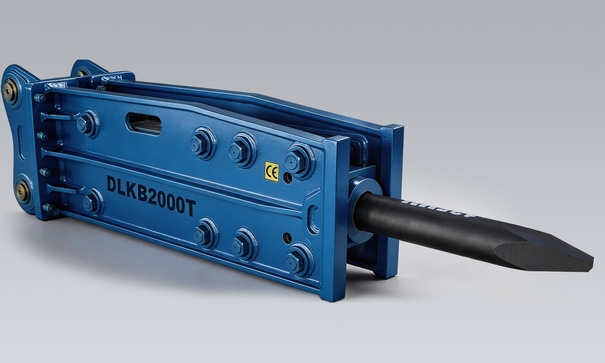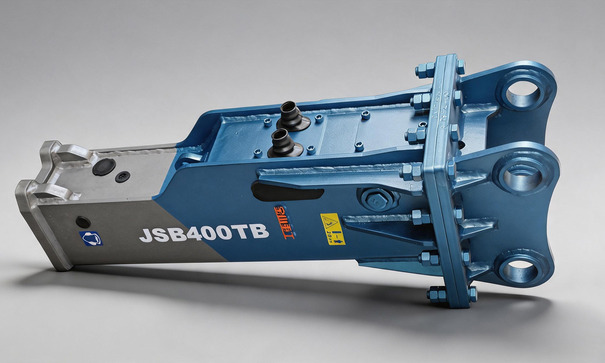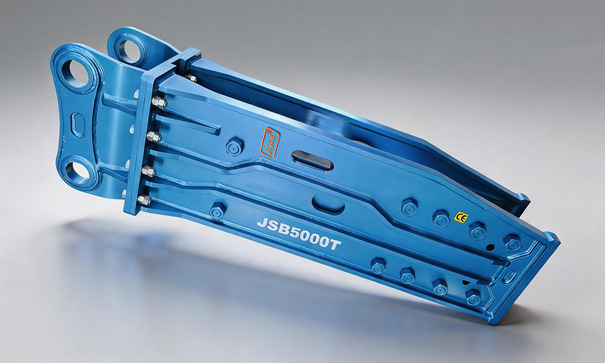

Oil weeping from the front cover and around the chisel is one of the most common breaker complaints, and the most common response — replace the chisel — is usually wrong.
The chisel is a consumable, and a worn one does need replacing. But when oil appears at the front cover, the seal that has failed is upstream of the chisel, and fitting a new chisel without addressing it simply consumes the new part faster.
What the leak is telling you
The front cover carries the wiper and the main seal that keep the percussion chamber closed. When oil appears there, one of three things has happened:
• The main seal on the piston head is damaged. This is the usual finding, and it is often caused by debris — a fragment of a broken chisel tip or a sliver of hard material — carried into the seal and folding its lip.
• The chisel has been running dry. Insufficient grease at the chisel shank wears the bushing, which then loads the seal unevenly.
• The chisel is misaligned in the bore. Usually the result of operating at an angle rather than square to the work.
A seal with a folded lip does not reseat. It scores the piston as it moves, and the scoring produces the metal particles that finish the job.
The two operating errors behind most of it
In practice, two habits account for the majority of these failures.
Idling on the trigger. Running the breaker without contact with the material — "blank firing" — sends the piston into the chisel with nothing to absorb the energy. The shock travels back through the tool and into the seal and bushing. It is the single most destructive thing an operator can do to a breaker, and it is invisible on a timesheet.
Working off-square. Holding the breaker at an angle to the surface loads the chisel in bending rather than in compression. The chisel is designed for axial load; bending load wears the bushing oval and lets the chisel rock in the bore, which is what finally destroys the seal.
What to do
• Stop using the breaker and strip the front end. Inspect the chisel shank for scoring and the bushing for ovality.
• Replace the piston main seal. If the chisel is only lightly worn — no chipping at the tip, shank within tolerance — it can go back into service.
• If the chisel tip is chipped or the shank is worn past the limit, replace it. A worn chisel transfers impact into the tool body instead of the material, and the efficiency loss is measurable long before the part fails.
• Check the grease supply to the shank. Dry running accounts for a large share of repeat failures after a repair.
Preventing the next one
The breaker is the attachment with the shortest service interval in most fleets, and the one most often operated by the least experienced hand. Three rules cover most of the risk: never fire without contact, keep the tool square to the work, and grease the shank on the specified interval — more often in wet, muddy or dusty conditions.
Matching a breaker to a carrier, or replacing a front end? Send us the model, the serial number and photos of the chisel shank; we will confirm which parts are in stock and whether the tool body needs inspection.