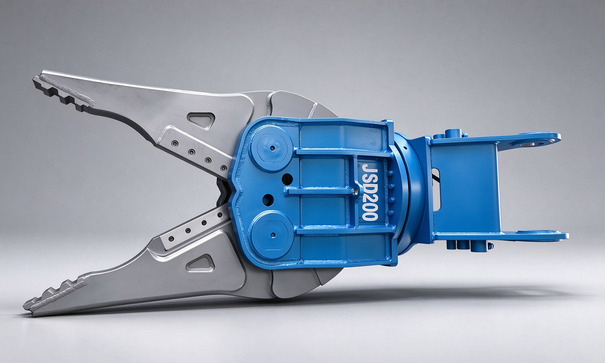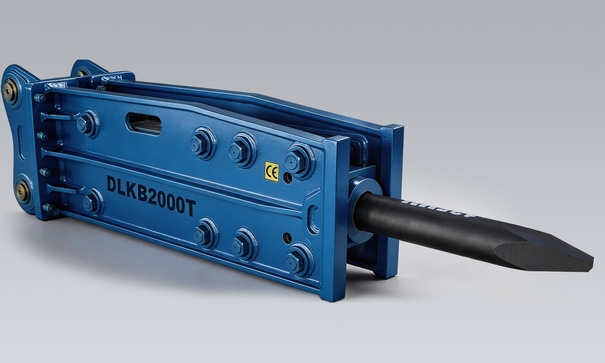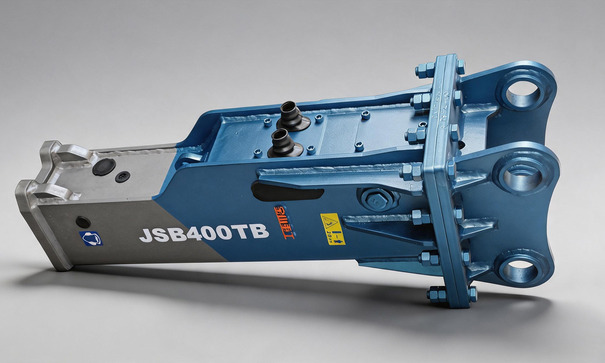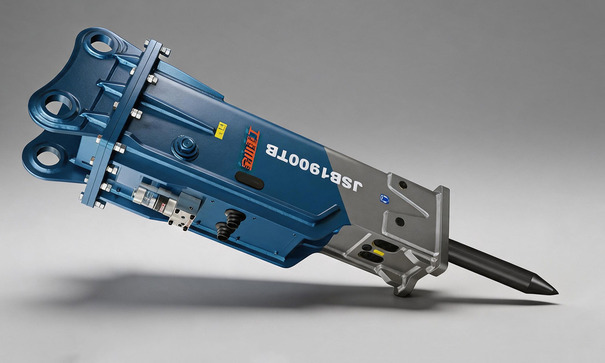

Buyers often choose between a dual-cylinder power shear and an eagle shear on the basis of carrier size. That is the wrong variable. Both families are available across a wide tonnage range, and the choice that decides productivity is the material being cut and the shape it is in when it reaches the jaw.
What each design is actually good at
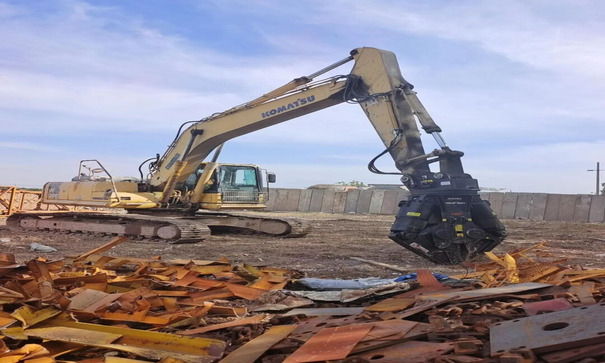
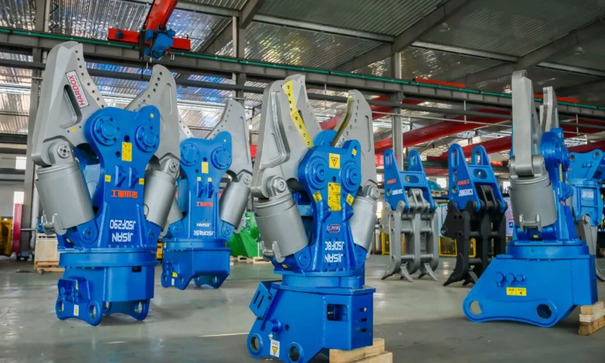
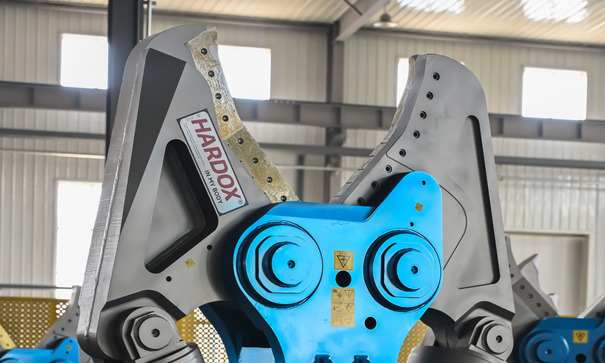
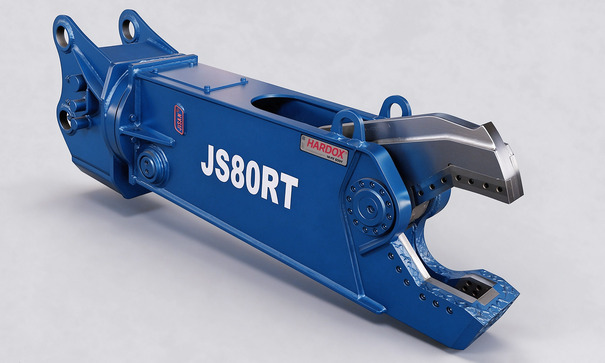
Dual-cylinder power shear. Two cylinders drive the jaw through a large arc, producing high force at every point in the stroke. The jaw opening is generous, and the geometry is designed to take material that is thick, bulky or irregular — hull plate, chassis rails, structural beams, engine blocks still attached to the frame.
The trade-off is cycle time on thin material. A shear built to bite 30 mm plate does not need to be fast through 3 mm sheet, and it is not.
Eagle shear. A single-pivot design with an offset blade that produces a shearing action rather than a crushing one. The cut is cleaner and lower-loss, the cycle is faster, and the tool handles mixed and thinner sections — rail, rebar, wire rope, sheet, aluminium sections — without the material folding instead of cutting.
The trade-off is appetite for bulk. Presented with a 40 mm hull plate, an eagle shear of the same carrier class will be slower than a dual-cylinder unit, and will wear faster if used that way continuously.
The decision matrix
• Ship-breaking and heavy structural steel — dual-cylinder. The material is thick, variable and often still assembled; force and jaw opening govern.
• End-of-life vehicles — both, in sequence. A dual-cylinder shear for the chassis and drivetrain, an eagle shear for the body panels and the cleaner cuts where sorted fractions matter.
• Rail and long section — eagle shear. The offset blade cuts rail cleanly without the deformation a crushing jaw produces.
• Mixed scrap yard — dual-cylinder as the primary tool, eagle shear as the second attachment. Yards that buy only one usually buy the dual-cylinder and then add the eagle within a year.
• Demolition with rebar — eagle shear for the rebar and section, crusher or pulverizer for the concrete.
Three questions that settle it
Before comparing quotations, answer these:
• What is the thickest section you will cut weekly, not occasionally? Size the tool for the weekly case; renting for the annual exception is cheaper than carrying it.
• Does the cut surface matter? If material is sold by grade to a mill, a clean shear cut reduces losses and contamination. If it goes to a shredder, the crushing action is irrelevant.
• How many tool changes per shift? A yard that switches attachments four times a day needs a coupler that makes the switch a minute, not a job. Two tools with a fast coupler often beat one oversized tool.
The mistake to avoid
The most expensive choice is buying for the largest job rather than the most frequent one. A 65-tonne-class shear mounted on a 40-tonne carrier, run at reduced pressure to protect the carrier, does less work than the correct 45-tonne unit at full pressure — and it wears out faster, because the structure was designed for loads the carrier cannot deliver.
Tell us what you cut and how often, and we will propose the frame size for the weekly case plus the second attachment for the exceptions.