
Two shears, one quotation sheet, three years apart
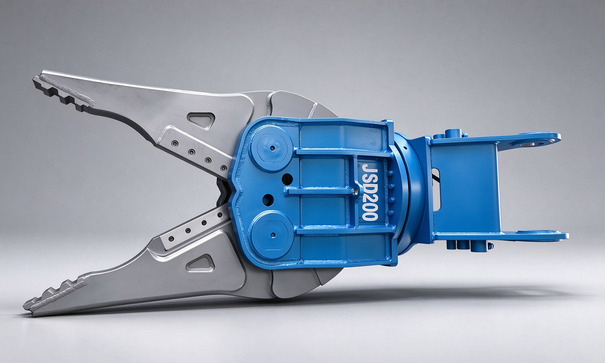
A buyer comparing dual-cylinder shears is usually shown two machines in the same size class, at a similar price, both described as Hardox. Three years later one is still cutting to tolerance and the other has been rebuilt twice. Nothing on the quotation sheet explains the difference, but six things on the machine do — and all six can be checked before the order is placed rather than after the first crack.
1. Plate that can be traced to the mill
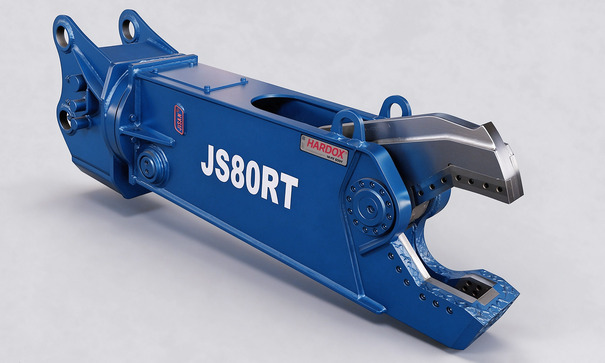
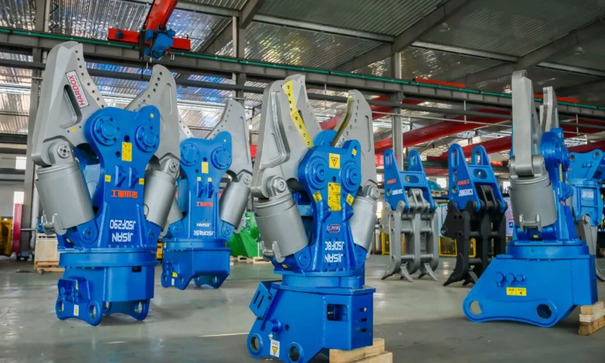
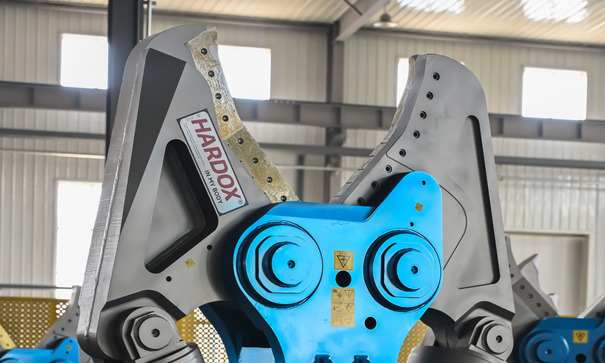
JISAN builds shear jaws and blades from genuine SSAB Hardox plate, and the company has held the Hardox authorization for six consecutive years — it is issued against annual purchase volume, not against a request. Every shear, eagle shear and car dismantling tool carries the Hardox mark with a QR code that resolves to the plate, which matters because counterfeit "Hardox" is common in this trade and a workshop with a stencil can produce a convincing copy of the sticker.
Ask to see the plate marking itself, not the certificate. HARDOX 400, 450 and 500 look different under the same light once you know what you are looking at.
2. One piece of steel, not a welded splice
Most shears in this class are cut in sections and welded together. The weld is a stress concentration and a heat-affected zone in the same place, and it is where a frame eventually cracks. JISAN welds the body first and then machines it as one piece on a gantry machining centre, so there is no splice in the load path and the bores on both sides stay concentric.
This is also why the shear does not "split" — the failure mode where the two halves drift out of alignment and the blades start to ride over each other instead of cutting.
3. A blade gap measured in hundredths of a millimetre
The gap between the two blade bodies on a JISAN shear is 0.05 mm, and a correctly assembled unit will cut a sheet of A4 paper without any shim being added. That sounds like a parlour trick. It is not: a shear that needs shims at delivery will need re-shimming in the yard, and every re-shim is a day of production plus a question about what else was out of tolerance.
The same standard runs across the range, from units for 3 to 5 tonne carriers up to the 60 to 80 tonne class. Small machines are not built to a looser tolerance; they are built to the same one.
4. The components you cannot see in a photograph
Four items decide how a shear behaves after the first thousand hours:
• Rotation motor. JISAN fits a Swiss-made plunger motor for the 360 degree rotation. It holds position under load, which is what "accurate positioning" actually means when you are cutting a hull plate in sequence.
• Cylinder tube. Honed, not just bored. The surface finish is what the seal runs against.
• Seals. Imported NOK. A seal is a cheap part that costs a shift.
• Synchronising linkage. Twin cylinders with a linkage that keeps both jaws square to the load, rather than letting one side lead.
5. Protection for the part that breaks first
Cylinder rods are the most exposed component on a shear. They sit where the material being cut can reach them, and a scored rod takes the seal with it. JISAN builds a guard over the rod area — a detail that costs almost nothing at the factory and prevents the most common unscheduled stop in a yard.
6. What happens in year two
Durability decides whether the machine still cuts. Service decides whether it cuts this week. JISAN runs a 24 hour, 365 day service line on the "1030824" rule: 10 minutes to acknowledge, 30 minutes to a proposed solution, 8 hours to dispatch a warranty part, 24 hours to put an engineer on site for a problem that cannot be solved remotely.
For a yard running a single primary shear, that fourth number is the one that matters. A shear waiting for a blade bolt is not a shear.
How to use this list
If you are comparing two quotations, ask for six things in writing: the plate grade and its mill marking, whether the body is machined as one piece or welded from sections, the blade gap and whether the unit is shim-free at delivery, the make of the rotation motor and the seals, whether the cylinder rods are guarded, and the warranty terms with the response times that go with them.
A supplier who answers all six is selling a machine. A supplier who answers three is selling a price.
Comparing shears for a yard? Send the carrier model, the material mix and the section thickness you cut most often, and we will send the six answers for the size class that fits, in writing, before you decide.